While installing a new hot water system is generally a simple process, you might be surprised to learn that in some cases, you will need a permit from your local council to do so. Depending on which state you’re in and what type of water heater you choose, you may need to meet specific legal and safety requirements to ensure compliance. Failing to get the required approval can create headaches for homeowners down the line with safety, compliance, insurance or when you come to sell your home.
In this article, we will explain when permits are required, what can happen if you install a new hot water system without them, and how professional installers like Same Day Hot Water Service ensure the job is done safely, legally, and without any stress.
Quick Answer: The Short Version
In short, all local councils have different rules on what sort of permission you need to install a new hot water system, so you should contact your local council directly before starting work. But, in most cases, the installation of a new hot water system by a licensed plumber is classed as ‘notifiable work’. This means that as long as it’s installed by a professional, no permits are necessary. An example of notifiable work would be replacing an existing electric hot water system with another electric system.
However, if your replacement hot water system is gas, for example, it may be considered ‘regulated work’, in which case it will require a permit. Brand new installations and major changes (the location of your hot water system, for example) are also more likely to require a permit.
Understanding the Difference: Council Approval vs. Plumbing Permits
What is Council Approval?

If the installation of your new hot water system requires new plumbing, drainage or electrical work, it will most likely be classed as ‘regulated work’, and you will need to apply to your local council for a Development Application (DA).
DAs are almost always required for new installations or replacement hot water systems that require structural changes, major plumbing upgrades, or when the water heater is being moved to a new location. The reason you need a DA is that major changes are termed ‘assessable development’, rather than ‘accepted development’ (that doesn’t require a DA).
What is a Plumbing Permit/Compliance Certificate?
If the replacement of your hot water system falls into the ‘notifiable work’ category, which most do, you’ll need a Plumbing Permit. These are obtained by your licensed plumber, not by homeowners.
This just means that your plumber will register the work with your state’s building authority, and no local government permits need to be obtained. The reason for the permit is to ensure that all work meets Australian Standards (AS/NZS 3500). Once the work is completed, your plumber will issue you a Compliance Certificate.
Why This Distinction Matters
A DA is generally a more expensive and time-consuming process than installations that only require a plumbing certificate, which is why you should always contact your local authority to check if a DA is needed before you apply.
If your new water heater is installed using a Plumbing Permit, it’s critical to ask your plumber to provide you with the Compliance Certificate as soon as it’s issued. It’s crucial for your insurance and warranty and guarantees the system meets safety standards.
When You DON’T Need Council Approval
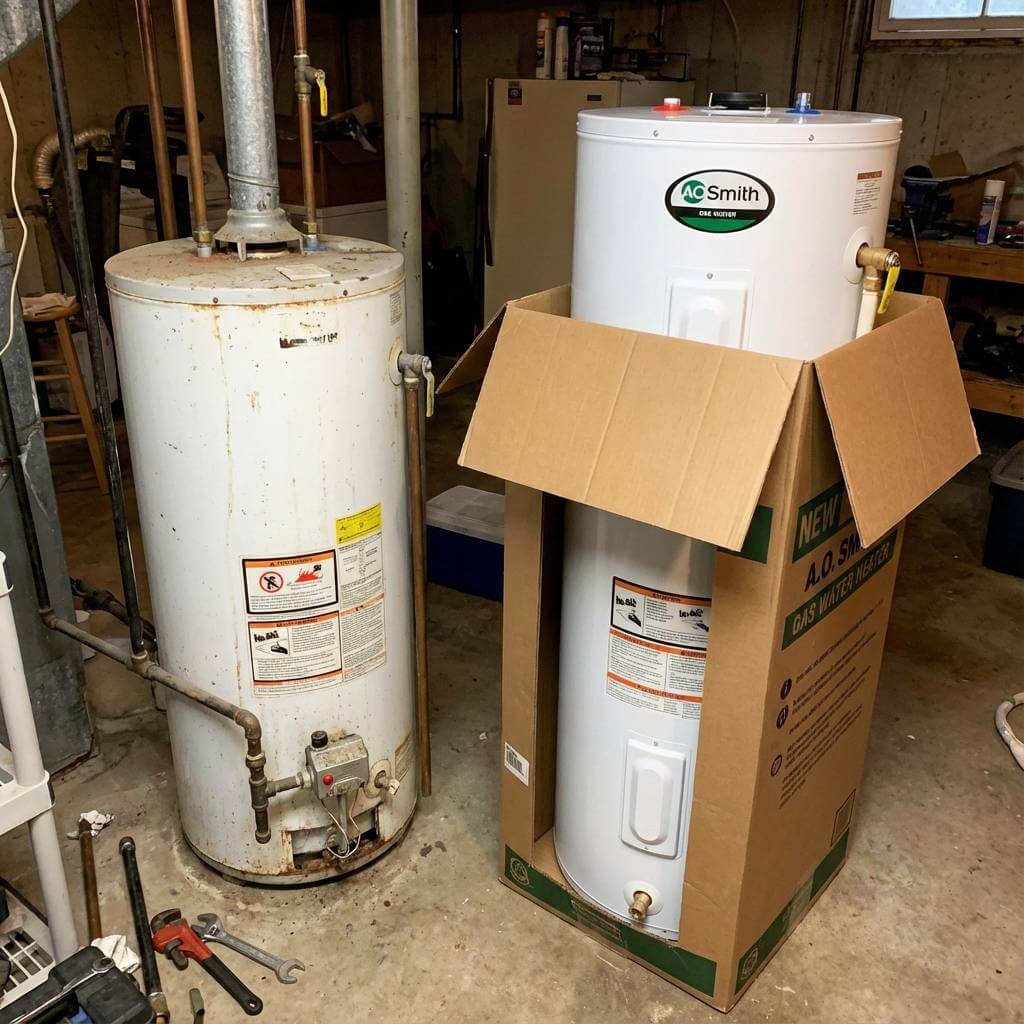
Standard Like-for-Like Replacements
- Same type (gas to gas, electric to electric)
- Same location
- No structural modifications
Minor Upgrades Within Existing Footprint
- Capacity changes
- Improvements to reduce energy consumption
- Technology upgrades (e.g. switching to a heat pump hot water system)
What You Still Need
- Licensed plumber
- Plumbing Compliance Certificate
- Adherence to building codes
- Proper disconnection/connection
When You MIGHT Need Council Approval
When Changing Fuel Types
If you’re switching from an electric hot water tank to a gas instantaneous water heater, this will likely trigger the need for council approval as gas work and new hot water lines may be classed as ‘assessable’ work. Again, you should seek advice from your local authority, as there are different rules for different locations in Australia.
Scenario 2: Relocating Your Hot Water System
Moving your water heater to a different part of your property may have access, safety or even structural implications that require approval. In residential settings, heat pump hot water systems are treated much like air conditioners because they emit noise, so there may be strict requirements on where your new system can be placed.
Scenario 3: New Installations (Not Replacements)
If you’re extending your home or building a second dwelling, you’ll need council approval for a brand new system because the installation must comply with safety standards and building codes. These rules are designed to prevent scalding risks, prevent bacteria growth and meet energy regulations, among other things.
Scenario 4: Heritage or Special Zones
If your property is subject to certain overlays, you may need approval to install a water heater because the work could affect the character appeal of the property in heritage zones, or it may need to meet particular safety requirements in bushfire zones or flood-prone areas.
Scenario 5: Solar or Heat Pump Systems
In some states, solar hot water system installation is considered self-assessable building work. However, you may need approval if the system is large, on the ground, on a heritage building or violates other planning requirements.
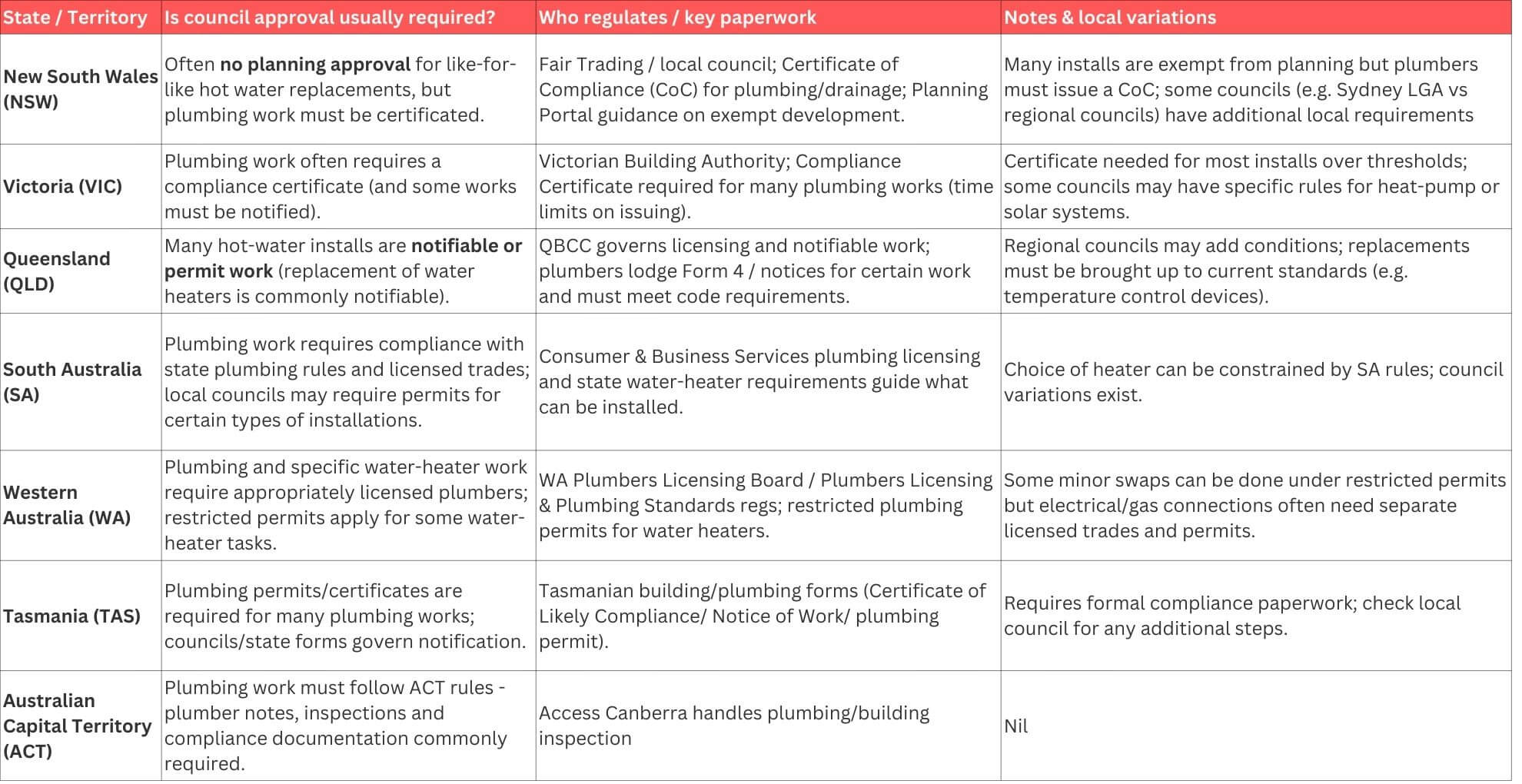
State-by-State Variations: What You Need to Know
The Proper Installation Process: Compliance Checklist
Step 1: Hire a Licensed Plumber
To ensure your new hot water system is compliant with Australian regulations, only have it installed by qualified plumbers who are licenced and insured. To simplify the process, Same Day Hot Water Service can arrange hot water system installation for you.
Step 2: Site Assessment
A detailed site assessment can help determine the best type of water heater and location for your home. Your plumber will check available power sources, drainage, ventilation, water pressure and existing pipes so that any extra work required to overcome non-compliance is included in the installation cost estimate.
Step 3: Obtaining Required Permits
If permits are required, your plumber should take care of this step for you. This includes actions like lodging notifiable work forms. Generally, permits can be issued within a few days and your plumber will pass on the cost of admin fees or permit charges.
Step 4: Installation
Once you have the required approvals, your new hot water system can be installed. Your plumber will need to follow strict safety guidelines and ensure the installation meets Australian standards for plumbing and drainage. Depending on the type of installation, a local authority or certifier may need to inspect the work once finished.
Step 5: Certification
Following installation, your plumber will issue you a Compliance Certificate or lodge a Certificate of Completion. This is to confirm that installation has been carried out by a licensed plumber and meets all necessary standards. Certificates are usually provided within a few days, and it’s the homeowner’s obligation to ensure they receive it as it’s essential for warranties, insurance claims and future property sales.
What Happens If You Skip Approvals or Permits?

If you fail to obtain the correct approvals or permits for a hot water system, it can lead to significant legal and financial consequences. This includes fines, rectification orders, and potential insurance problems such as voided claims or limits on property coverage.
Skipping approvals can also damage your property’s value, as unapproved work must be disclosed during a sale and may trigger red flags during building inspections, which can deter potential buyers.
Most importantly, bypassing approvals is a major safety hazard as you risk gas leaks, electrical hazards, water damage, and even carbon monoxide poisoning. Therefore, proper compliance is an essential step that shouldn’t be overlooked.
How Same Day Hot Water Service Ensures Full Compliance
Same Day Hot Water Service ensures full compliance by using only fully licensed and insured technicians who manage all required permits, paperwork, and council liaison.
With state-specific expertise, you can rest assured that installations will meet local regulations and official compliance requirements.
With a fast turnaround and a promise to never cut corners, Same Day Hot Water Service delivers safe, legal, and hassle-free hot water system installations on time, every time.
Frequently Asked Questions
How much does a plumbing permit cost for hot water installation?
Permits are issued by local councils, so the cost of a plumbing permit varies depending on where you live and the complexity of the work involved. Generally speaking, permits can range in price from $50-$400.
Can I install a hot water system myself to save money?
By law, you must have a new hot water system installed by a licensed plumber, as this ensures it meets hot water system regulations that make it safe to use. DIY installation not only risks your safety and that of others, but you could also face fines or void your warranty.
How long does it take to get a plumbing compliance certificate?
According to the Plumbing Industry Association, Master Plumbers, plumbers responsible for supplying compliance certificates must do so within 14 days of completing the work.
Do I need approval to upgrade from a storage tank to instantaneous?
This depends on which Australian state or territory you live in, as although it’s a new installation, in some states this type of work is considered exempt development. It’s best to contact your local council directly.
What if my hot water system failed suddenly – do I still need permits?
Yes, you’ll still need a Plumbing Permit for emergency hot water repairs. However, your plumber can often register the work after it’s completed (as long as it’s within a set amount of time, as determined by the state regulator) because hot water is an essential service.
Will switching from gas to electric require council approval?
In most cases, switching from gas to electric will require council approval, as you will generally require extensive gas and electrical work to decommission and install your new system. However, you should contact your local authority directly to clarify their rules before applying for permission.
Do solar hot water systems have different approval requirements?
Yes, solar hot water systems have different approval requirements. However, most standard rooftop installations are self-assessable or exempt development, so they don’t require council approval. However, you should always check with your local council first.
How do I know if my plumber is properly licensed?
Searching your state’s relevant regulator (see table above for a full list of regulators for each state) by name or license number can tell you if your plumber has a valid license.
What documentation should I keep after installation?
After you’ve had a new water heater installed, you should keep the invoice, warranty, installation receipt and, most importantly, the compliance certificate, for any future warranty claims or compliance checks.
Can a non-compliant installation affect my home insurance?
Yes, a hot water system that’s not compliant can affect your home insurance by increasing premiums, voiding your policy, or having insurance claims denied – leaving you to cover the cost of damages should something go wrong.
The Easiest Way To Buy A New Hot Water System
The installation or replacement of a hot water heater is highly regulated because a compliant hot water system is a safe one. Understanding the approvals process and having your hot water system professionally installed not only helps you avoid costly mistakes it also ensures optimal energy efficiency of your new system and that it meets hot water regulations, keeping your home and family safe.
With the right installer, such as Same Day Hot Water Service, you can enjoy reliable hot water knowing that every step, from compliance to certification, has been taken care of properly.
To view our range of hot water systems and organise fast and easy installation, visit our website or call us on 1300 256 904.