Most people don’t give their hot water system a second thought until it stops working. Then, suddenly, you’re deciding between gas and electric under pressure, with little time to think it through. Gas is usually the practical choice if your home already has it connected and you’re running a busy household, whereas electric makes more sense if you don’t have gas access, you’re on solar, or you want to keep the install simple.
That said, neither answer is universal; the right hot water system depends on your home, not just the fuel type. We are here to help you make the right call!
Gas or Electric Hot Water?
The answer you are looking for really comes down to three things: whether your home already has gas connected, how much hot water your household actually uses, and what the full cost looks like over time, rather than just on installation day.
Gas is often the path of least resistance when the infrastructure is already in place, and demand is high. Electric suits homes without gas access, and it’s become a genuinely stronger option in recent years as heat pumps have brought running costs well below those of a standard storage unit.
If you’re deciding whether to stick with your current fuel type or switch, those three factors should drive the decision, not the unit’s sticker price.
Simple Decision Snapshot
| Situation |
System Worth Considering |
| High demand, gas already connected |
Gas continuous flow |
| Low upfront budget |
Standard electric storage |
| Solar household wanting lower bills |
Electric storage (timed to solar) or heat pump |
| Best long-term efficiency |
Heat pump |
| No gas access |
Electric storage or heat pump |
| Urgent like-for-like replacement |
Match existing fuel type to minimise cost and installation time |
What Is a Gas Hot Water System?
Gas hot water systems run on either natural gas or LPG and come in two main forms. Gas storage keeps a heated tank ready to go, while gas continuous flow, also called instantaneous gas, heats water on demand the moment you turn on the tap.
Continuous flow is the more popular choice in Australian homes, largely because you won’t run out mid-shower. However, these systems are typically installed outdoors to handle exhaust venting, so available wall space is worth considering. Homes on the mains use piped natural gas, while LPG via gas bottles covers areas without mains access. LPG costs more per unit, which raises running costs.
What Is an Electric Hot Water System?
Electric hot water systems use heating elements to warm water inside a storage tank. They’re the most common type of hot water system in Australian homes and are generally the cheapest to purchase and install.
There are three types worth knowing: standard electric storage, electric instantaneous (which heats on demand but can require significant electrical capacity, and in some cases, three-phase power), and heat pumps.
Standard Electric vs Heat Pump
Standard electric storage is simpler and cheaper upfront. It does the job, but it draws a lot of electricity. Running costs can reach $700 to $1,000 a year for a typical family on peak tariffs.
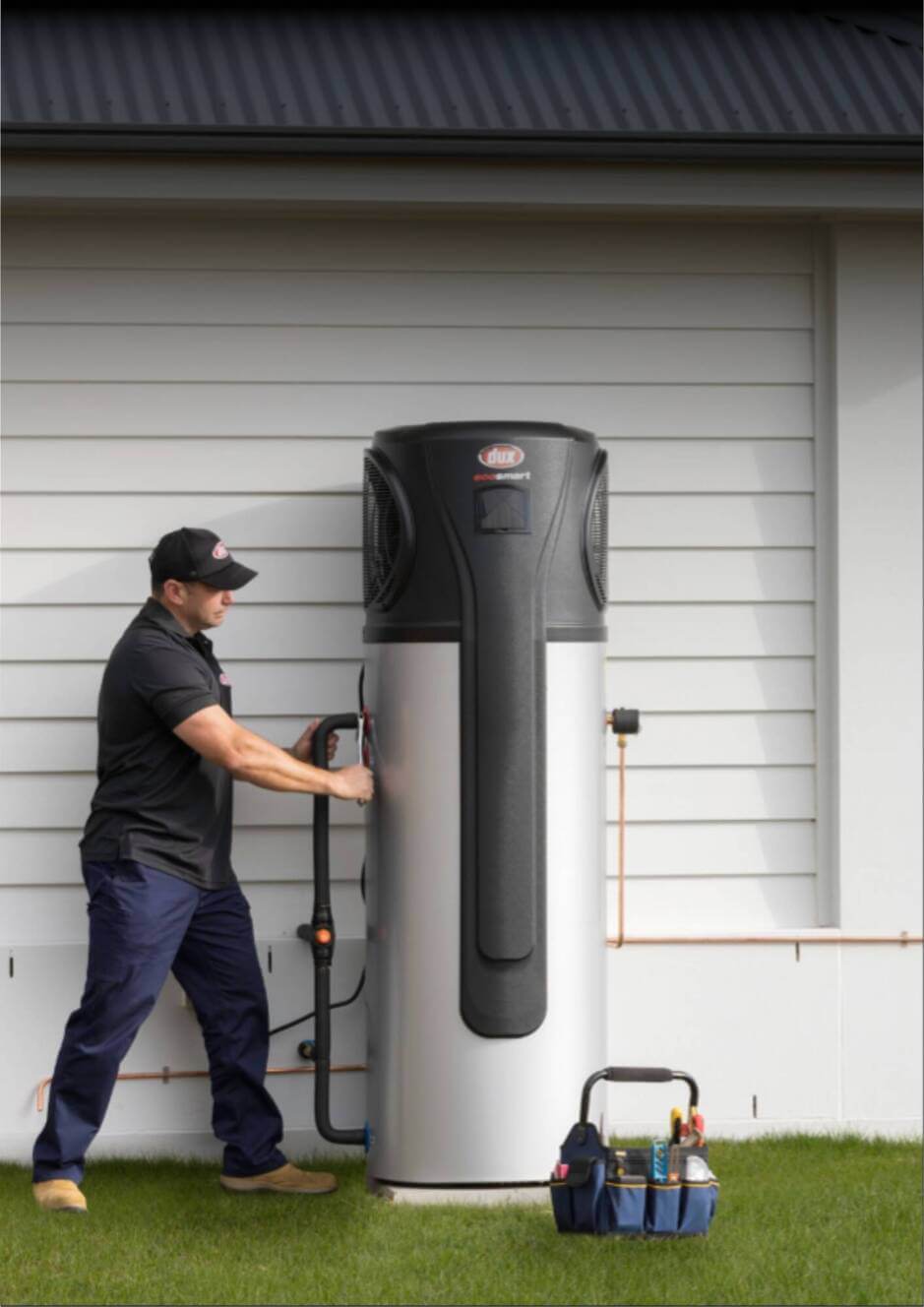
Heat pump hot water systems cost more upfront, but use around 60-75% less electricity than conventional electric systems. According to Australian Government energy guidance, heat pump water heaters use roughly 30% as much energy as a conventional electric hot water system.
That difference adds up to meaningful savings over the system’s life, with annual running costs for a heat pump ranging from $230 to $310 for a family of four.
Gas vs Electric Hot Water: Key Differences
| Factor |
Gas Continuous Flow |
Standard Electric Storage |
Heat Pump |
| Upfront cost |
$2,200–$4,500 |
$1,200–$2,500 |
$3,500–$5,500 |
| Annual running cost |
$380–$480 |
$700–$1,000 (peak) |
$230–$310 |
| Installation complexity |
Moderate to high |
Low |
Moderate |
| Gas connection required |
Yes |
No |
No |
| Solar compatible |
No direct benefit |
Yes (timed use) |
Yes (most efficient pairing) |
| Space needed |
Wall-mounted, outdoors |
Tank indoors or outdoors |
Outdoor compressor unit |
| Environmental impact |
Lower than coal-grid electric |
Higher on coal-heavy grids |
Lowest (especially with solar) |
| Lifespan |
10–20 years |
10–15 years |
15–20 years |
| Government rebates |
None |
Minimal |
$500–$1,500 |
Is Gas or Electric Hot Water Cheaper?
The answer depends on which costs you’re comparing.
Electric storage systems are usually cheaper to buy and install, but more expensive to run on standard electricity tariffs. Gas may involve higher installation costs if gas lines need to be run or upgraded. A new gas connection can cost $2,000 to $4,000 on top of the unit and labour, which changes the upfront picture significantly for homes without existing gas.
Heat pumps sit at the other end with a higher upfront cost and lower running costs. Solar and heat pump systems often cost more initially but deliver long-term savings. At the same time, electric storage is cheaper upfront but more expensive to run without solar or off-peak tariffs.
Don’t choose on purchase price alone. A heat pump that costs $1,500 more than a standard electric unit but saves $400 a year pays for itself in under four years, then keeps saving money for another decade.
Which System Is Better for Larger Households?
For larger households, the morning rush is where any system gets tested. Showers, laundry and kitchen use hitting at the same time will expose a system that’s undersized or slow to recover. Gas continuous flow handles that kind of back-to-back demand comfortably because there’s no tank to empty. A 20-24 litres-per-minute unit covers most families of four or five.
Electric storage can work too, but you must ensure you have the right size. A 315-litre tank is the starting point for a family of five, and going smaller means waiting for a reheat mid-morning. Heat pumps are a viable option for families as well, particularly where solar is in the picture to offset running costs.
Example Household Scenarios
| Household |
Situation |
Recommended System |
Why |
| Couple in an apartment |
Low hot water use, no gas connection |
Standard electric storage |
Low upfront cost, simple installation, sufficient for two people |
| Family of five |
Natural gas already connected, high demand |
Gas continuous flow |
Handles back-to-back demand without running out, no new connection needed |
| Solar household |
Wants to reduce energy bills |
Heat pump or timed electric storage |
Can run during daylight hours using excess solar, significantly reduces grid electricity use |
| Rental property |
Needs fast replacement |
Like-for-like replacement |
Avoids new connection costs and minimises installation time, though a better long-term option is worth checking before committing |
Which System Works Better With Solar Panels?
Solar panels shift the equation significantly in favour of electric systems. An electric storage system timed to run during daylight hours can use excess solar generation rather than draw from the grid, substantially reducing running costs.
A heat pump paired with solar is even more effective. It already uses far less electricity than a standard electric unit, and when that electricity comes from the roof, water heating costs can be minimal.
Gas systems don’t benefit directly from rooftop solar. If you have solar panels or are planning to install them, an electric hot water system is worth serious consideration.
Installation Factors That Can Decide the Answer
Your property’s existing setup can narrow the options before you’ve even looked at a brochure. A licensed installer will work through all of this with you, but these are the main factors to know up front.
| Factor |
What to Consider |
| Gas connection |
Whether one exists and how far the new system sits from the meter affects installation cost significantly |
| Electrical capacity |
Some instantaneous electric systems require three-phase power, which not all homes have |
| Available space |
Storage tanks need floor space, heat pump compressors need outdoor clearance |
| Ventilation |
Gas systems require exhaust venting, which affects where they can be installed |
| Drainage |
A pressure relief valve needs a compliant discharge point |
| Access |
Tight spaces or older homes can add to removal and installation scope |
A licensed plumber or gasfitter must carry out all installation work.
When Like-for-Like Replacement Makes Sense
If your system has failed and you need hot water today, replacing like-for-like is often the fastest and least disruptive path. The existing connections are in place, reducing installation time and cost. This is a reasonable call when the budget is tight and minimal plumbing or electrical changes are needed.
That said, a direct replacement isn’t always the right long-term decision. With gas prices rising and heat pump efficiency improving year on year, it’s worth at least asking the question before you default to the same system type.
Government Rebates
Heat pump and solar hot water systems are eligible for rebates in most states, though amounts and eligibility criteria change, so it’s worth checking what’s current at the time of purchasing.
| Program |
Where |
How It Works |
| Small-scale Technology Certificates (STCs) |
Nationwide |
Applied as an upfront discount by your installer |
| Hot water upgrade incentive |
NSW |
Available to eligible households and small businesses switching to heat pump or solar hot water |
| Victorian Energy Upgrades |
Victoria |
Supports heat pump upgrades and can reduce upfront costs significantly, with eligible households able to combine incentives |
Same Day Hot Water Service can help you work out what’s currently available in your area.
What Victorian Homeowners Need to Know
From 1 March 2027, any gas hot water system in an existing Victorian home that reaches end-of-life and cannot be repaired must be replaced with an electric alternative. Gas systems can still be repaired in the meantime, and there’s no requirement to switch before the system actually fails. But if your gas unit is ageing, planning the transition now means you get to choose the right system on your own terms rather than making a rushed call the morning it stops working.
On emissions, heat pump hot water systems produce no direct greenhouse gas emissions when running on renewable electricity, making them the lower-emissions option as the grid continues to move away from coal. Gas hot water systems emit greenhouse gases every time they run, which is worth factoring in if reducing your household’s carbon footprint is part of the decision.
So, Should You Choose Gas or Electric Hot Water?
Choose Gas Hot Water If…
- Natural gas is already connected to your home
- Your household runs through hot water quickly, multiple bathrooms, and back-to-back showers
- You want continuous flow with no risk of running out
- Your home suits outdoor installation and gas venting
Choose Electric Hot Water If…
- You don’t have gas access, or the connection cost isn’t justified
- You want a simpler installation at a lower upfront price
- Your hot water use is low to moderate
- You have solar panels and want to offset running costs
- You’re weighing up a heat pump for long-term efficiency, currently the most cost-effective electric option available
Ask a Specialist If…
- Your system has already failed, and you’re not sure what to replace it with
- Your energy bills are high, and you think the hot water system is part of the reason
- You’re renovating or considering switching fuel types
- You need a same-day replacement and want to make the right call without the pressure of deciding on the spot
Get Help Choosing the Right Hot Water System
Same Day Hot Water Service supplies and installs gas hot water systems, electric hot water systems, and heat pump systems across Sydney, Melbourne, Brisbane, Perth, Newcastle, Central Coast, Wollongong, and the Sunshine Coast.
We don’t push one system over another. We help you work out what actually suits your home, your usage, and your budget.
Need help comparing options? Contact Same Day Hot Water Service for advice on supply, installation, or replacement. If your system has failed, we offer same-day service across our service areas.
Frequently Asked Questions
Is gas or electric hot water cheaper to run in Australia?
Gas hot water systems are generally 30 to 40% cheaper to run than standard electric hot water systems, with annual running costs typically in the $380 to $480 range for a family compared to $700 to $1,000 for peak-rate electric. Heat pumps are the cheapest of all at around $230 to $310 per year.
Is gas hot water better than electric for large families?
Gas continuous flow handles high demand well because it heats water on demand rather than storing it, so you won’t run out during a busy morning. Large electric storage tanks can also work for families if sized correctly, and heat pumps are a viable option, too. The right answer depends on whether gas is already connected and how the household uses hot water.
Should I replace my gas hot water system with electric?
It depends on your situation. If you have solar panels, a heat pump is often worth the upfront investment. If you’re in Victoria, gas systems that reach end-of-life after 1 March 2027 must be replaced with electric alternatives. In other states, there’s no obligation, but rising gas prices and available rebates on heat pumps mean it’s worth running the numbers before defaulting to like-for-like.
Are electric hot water systems good if I have solar panels?
Yes. Electric storage systems can be timed to run during daylight hours using excess solar generation, significantly reducing operating costs. Heat pumps pair particularly well with solar PV systems, and combining the two can bring water heating costs down to very little.
What is the most energy-efficient hot water system?
Heat pump hot water systems. They use around 60 to 75% less electricity than conventional electric storage systems and achieve energy ratings of 6 to 7 stars, compared to 3 to 4 stars for standard electric storage and 5 to 6 stars for gas continuous-flow.
Can I switch from gas to electric hot water?
Yes, in most cases. The feasibility depends on your home’s electrical capacity, available space for the new system, and whether any plumbing changes are needed. A licensed plumber can assess your property and advise on what’s involved. If you’re in Victoria, planning the switch before the March 2027 deadline gives you more time to choose the right system rather than making the decision under pressure.