Neither a heat pump nor a solar hot water system is automatically the better choice. The right answer depends on your roof, your climate, how much hot water your household uses, and whether you already have solar panels. Both are genuine upgrades over older electric or gas storage water heaters, but they work in completely different ways and suit different homes.
What follows is a practical look at how each type of water heater works, what they actually cost to run, and which one makes the most sense for your property and setup.
What Is the Difference Between a Heat Pump and a Solar Hot Water System?
A heat pump water heater works a lot like a split system air conditioner in reverse. Instead of cooling a room, the heat pump unit pulls heat energy from the surrounding air and uses it to heat water in a hot water storage tank. It runs on electricity, but because it extracts heat rather than generating it directly, heat pumps use roughly 60-75% less electricity than conventional electric water heaters.
Even when the ambient air temperature drops, most modern heat pump systems can still operate at low temperatures, though energy efficiency decreases.
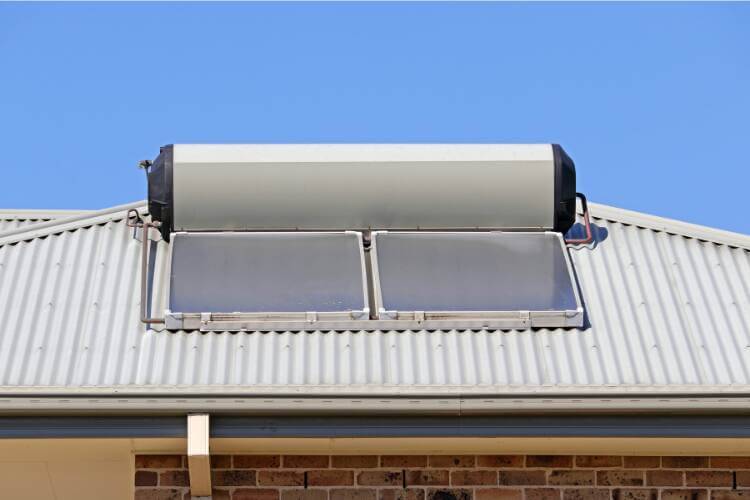
A solar hot water system uses roof-mounted solar collectors to absorb heat directly from the sun. That solar power is transferred through a heat exchanger into an insulated storage tank. On sunny days with enough solar energy, the collectors do most of the work. On overcast days, an electric element or gas booster kicks in to make up the difference. Some solar systems use an integrated system with a roof-mounted tank, while others use a split system with ground-level storage.
The key difference is that a heat pump water heater uses electricity to move heat from the air, while a solar water heater captures solar energy directly from the roof. Both reduce reliance on grid electricity and can lower energy bills, but they have different requirements for roof space, placement, and local climate.
A lot of people think solar hot water and solar PV are the same thing, but they are not. Solar hot water uses collectors or tubes on the roof to heat water directly. Solar PV panels generate electricity. They are completely separate technologies. Where it gets interesting is that a heat pump runs on electricity, so if you have solar PV panels on your roof, the excess solar electricity they produce during the day can run your heat pump water heater. You are basically heating water with energy you have already generated, which is why so many homes with rooftop solar panels are now going down the heat pump path instead.
Heat Pump vs Solar Hot Water: Quick Comparison
| Factor |
Heat Pump Water Heaters |
Solar Water Heaters |
| How it works |
Extracts heat from ambient air using a compressor, similar to a split system in reverse |
Roof-mounted solar collector panels capture heat directly from sunlight |
| Upfront cost (installed) |
Typically $3,000 to $6,000 before incentives |
Typically $4,000 to $7,000 before incentives |
| Running cost |
Very low, especially when paired with solar panels |
Very low in sunny conditions; higher when the booster runs frequently |
| Roof requirements |
None. Sits at ground level |
Needs suitable, unshaded roof space with good solar access |
| Climate suitability |
Works across most Australian climates, including cold climates |
Best in areas with abundant sunlight; needs more boosting in cooler locations |
| Noise |
The outdoor unit produces some noise |
Silent operation |
| Maintenance |
Occasional servicing of compressor and fan |
Regular cleaning of collectors, checking valves and booster |
| Works with solar panels? |
Excellent match. Can run on excess power from rooftop solar panels |
Not directly. Solar hot water and solar panels are separate technologies |
| Best for |
Homes with limited or shaded roof space; households already generating solar power |
Homes with a well-oriented, unshaded roof and strong solar access |
Pros and Cons of Heat Pump Hot Water Systems
Heat pump water heaters have a lot going for them. They do not need any roof space, making them a strong fit for homes with shaded roofs, awkward orientations, or roofs already occupied. Because heat pump hot water systems sit at ground level, they are generally easier to access for servicing.
If you have rooftop solar panels, a heat pump hot water system can be set on a timer to heat water during the day, running on excess solar electricity rather than drawing from the grid. For many households, this is one of the most cost-effective ways to run water heaters.
Heat pump systems are also more flexible across different climates. While they perform best in mild to warm conditions, modern units can still operate at lower temperatures than older models could handle.
On the downside, heat pump water heaters do produce noise from the compressor and fan. It is not loud, but you will want to think about where the unit sits, especially if it is near bedrooms or a neighbouring fence. They also cost more upfront than basic electric water heaters, and in very cold areas, the system works harder, which can eat into your energy savings. Recovery time can also be slower, so getting the right storage tank size for your household’s hot water consumption is important.
Pros and Cons of Solar Hot Water Systems
Solar water heaters have been a trusted option in Australia for decades. When roof conditions are right, a solar hot water system can deliver outstanding results. In areas with sufficient solar energy, these water heaters can reduce water-heating energy use by 50-90 per cent, depending on conditions and the household’s hot-water use.
Solar hot water is a genuinely renewable energy source. The system can substantially reduce greenhouse gas emissions when powered solely by solar energy, making solar water heaters one of the most effective options for long-term energy efficiency.
The catch is that not every roof is a good fit. Solar collector panels need a north-facing section with minimal shading and enough roof space for both the collectors and, in some setups, a roof-mounted tank. If your roof does not tick those boxes, the system will lean more heavily on its electric element or gas booster, and running costs will climb.
Installation is another thing to consider. You are looking at roof penetrations, hot-water pipes running between the collectors and the storage tank, and, depending on the roof, sometimes structural work. If you would rather keep things simple, a ground-level heat pump is much easier to install.
Running Costs: Heat Pump vs Solar Hot Water
There is no single answer to which water heaters are cheaper to run. It depends on your tariff, your local climate, how much hot water you use, and whether you have solar panels.
For a home with solar panels, a heat pump hot water system is often the better choice for running costs. Set it to run during the day when your PV system is generating excess power, and you can effectively heat water using solar power you have already paid for. Without solar panels, a heat pump still delivers significant energy savings over conventional electric water heaters, but you are paying for electricity to run it.
Solar water heaters in homes with suitable roofs and abundant sunlight can also have very low running costs. But if the booster kicks in regularly, those energy costs climb. In southern states or frost-prone areas, the booster does more work through winter.
Both systems deliver lower energy bills than existing hot water systems powered by conventional electricity or gas. A household with solar panels and limited roof space will almost certainly find heat pump water heaters more cost-effective. A household with a great north-facing roof and no solar panels might get better long-term value from a solar water heater.
Which System Suits Your Home?
The better question is not which hot water system is “better” overall, but which one fits your home.
A heat pump is usually the stronger option if your roof is shaded, limited, or already covered with solar panels. It is also a good fit if you want equipment that is easier to service, or if you are replacing an existing system and want a straightforward upgrade path.
A solar hot water system suits homes with good solar access, a north-facing roof, no shading issues, and enough space for the collectors. If your property gets strong year-round sun, solar water heaters can deliver outstanding energy efficiency over their lifespans.
Colder areas do not rule out either option. A properly sized heat pump hot water system can handle cooler climates, and a solar hot water system with a good booster setup can get the job done as well. The key is not to go off general advice here. Get someone to look at your actual property and make a recommendation based on that.
What About Rebates and STCs?
Both eligible solar water heaters and air source heat pump water heaters can attract Small Scale Technology Certificates (STCs), which reduce the upfront purchase price. The value varies depending on your location and the system you choose.
State-based incentives may also apply. Some states offer additional rebates for upgrading to an energy-efficient hot water system, though eligibility and amounts change regularly. It is always worth checking what is available when you get a quote.
Do not assume one type of water heater always gets a bigger rebate than the other. The incentive landscape shifts, and your installer should walk you through what applies to your situation.
So, Which Is Better: Heat Pump or Solar Hot Water?

Neither system is universally better.
Heat pump hot water systems tend to win on flexibility. They do not need roof space, they suit a wide range of Australian climates, and for many metro homes, heat pump water heaters represent the easiest and most practical upgrade from an older electric hot water system.
Solar water heaters can be excellent when roof conditions are right. They capture solar power directly, operate silently, and can minimise heat loss by storing water close to where it is heated on the roof.
The best move is to get a proper assessment for your property. At Same Day Hot Water Service, we supply and install both heat pump and solar hot water systems across Australia, and we are not biased towards one over the other. We will help you choose the system that actually suits your home. Give us a call or browse our range to find the right fit.
Frequently Asked Questions
Is a heat pump better than solar hot water in Australia?
It depends on your home. A heat pump is often the better fit for homes with limited roof space, shading, or existing solar panels. A solar hot water system can outperform in homes with excellent solar access and a suitable roof. Neither is automatically better across the board.
Does solar hot water still need boosting?
Yes. Most solar hot water systems include an electric heater or gas booster that activates during cloudy weather, winter, or periods of high demand. How often the booster runs depends on your local climate and household usage.
Are heat pump hot water systems noisy?
Heat pump water heaters produce some noise from the compressor and fan, roughly comparable to a small air conditioning outdoor unit. Noise levels vary between models, so placement matters. Installing the unit away from bedrooms and neighbouring boundaries helps keep things comfortable.
Which is cheaper to run, solar hot water or heat pump?
Both can deliver significant reductions in energy bills compared to standard electric water heaters. A heat pump paired with solar panels can be exceptionally cheap to run. A solar water heater on a sunny roof with minimal booster use is also very affordable. Your actual running costs depend on your tariff, climate, and hot water consumption.
Can I replace an electric hot water system with either option?
Yes. Both heat pump and solar water heaters are common upgrades from older electric storage water heaters. A heat pump is typically the simpler replacement, as it connects to existing plumbing and electrical systems without roof work. Solar hot water requires more installation work but can be well worth it on the right property. Your installer can advise on the best path based on your existing system and home layout.