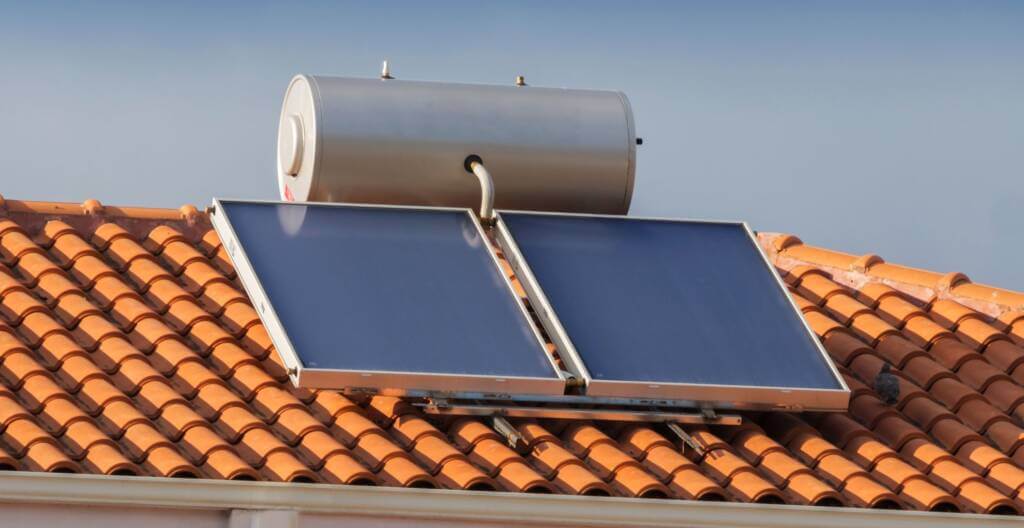
Your hot water is probably costing you more than you think. For most Australian households, heating water chews through 15 to 30 per cent of the total energy bill. If you’re still running an older electric storage tank on a continuous tariff, it’s likely even more than that.
Solar hot water systems use the sun’s energy to do the same job at a fraction of the running cost. The technology is straightforward, it works across every state, and it has been around long enough that the kinks are well and truly ironed out. But when most people hear “solar hot water,” they picture rooftop PV panels. That’s a different thing entirely. PV panels generate electricity. Solar hot water collectors heat water directly using solar thermal energy.
So how does solar hot water actually work? Below, we cover the heating process itself, the two main system configurations (hiline and loline), flat-plate versus evacuated-tube collectors, what happens when the sun is not out, open and closed circuits, real costs and savings, and how to tell whether solar suits your home.
How Solar Energy Heats Your Water
The basic principle behind solar water heating is simple. If you’ve ever picked up a dark garden hose that’s been sitting in the sun, you already know how it works.
Solar collectors mounted on the roof absorb radiation from the sun. That energy heats the fluid inside the collector, either the water itself (in a direct system) or a separate heat transfer fluid (in an indirect system). The heated water or fluid then moves to an insulated hot water storage tank, where it stays hot until you turn on a tap.
Every residential solar hot water system in Australia includes an electric or gas booster. This is not a backup for when something goes wrong. It is a built-in feature that automatically kicks in when solar input is not enough to reach the set water temperature, such as after a run of overcast days or during periods of high hot water consumption. The booster is part of the design.
This core process plays out differently depending on which of the two main system configurations you have.
Hiline vs Loline: The Two System Configurations
This is one of the most important decisions when choosing a solar hot water system, and most competing information online handles it poorly.
Hiline (roof-mounted, close-coupled)
With a hiline system, both the solar collectors and the storage tank sit on the roof. Hot water moves between them using a natural process called thermosiphoning. As water heats up in the collectors, it rises into the tank above, while cooler water drops back down to be reheated. It is the same principle as hot air rising. No pump is needed.
Fewer mechanical parts mean fewer things to go wrong and lower maintenance over the life of the system. The trade-off is that the roof structure needs to support the combined weight of a full tank and the solar panels. The Rheem Hiline Stainless Steel range is one our team recommends regularly for longevity.
Loline (split system, ground-mounted tank)
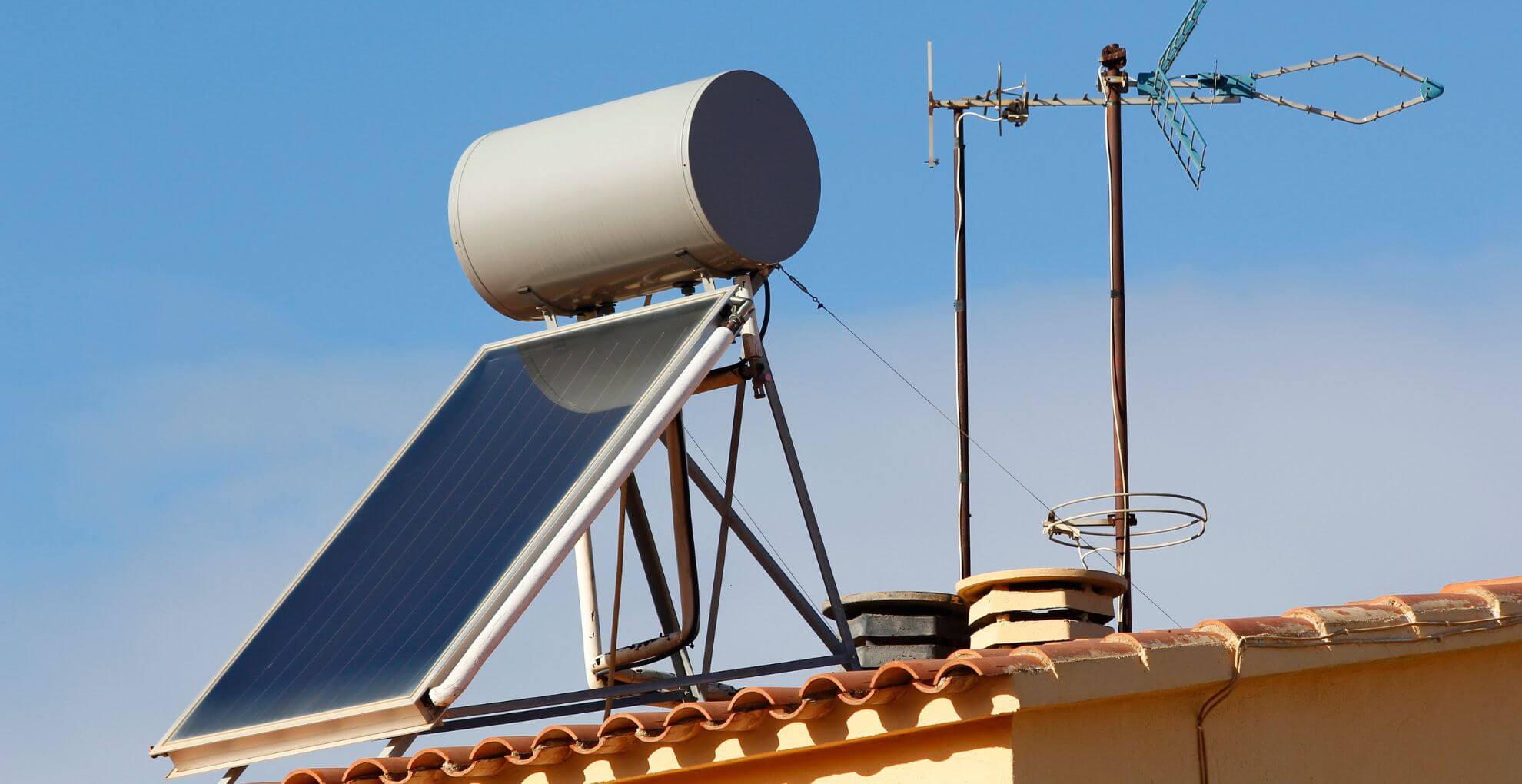
A loline or split system keeps the solar collectors on the roof but places the water tank at ground level. A small pump circulates water from the tank up to the roof collectors, where it is heated, then returns it to the tank. A controller manages the pump based on temperature.
This setup suits homes where the roof pitch, orientation, or structure does not support a rooftop tank. Electric boosted loline tanks can be placed indoors in some configurations. The pump and controller add components, so there is slightly more maintenance involved than with a hiline.
If your roof can handle the load and faces north, hiline is generally the simpler, lower-maintenance choice. If it cannot, or if you want the tank inside or at ground level, a loline split system solves that problem.
Types of Solar Collectors: Flat Plate vs Evacuated Tubes
The collector is the part of the system that does the actual heating. There are two main types, and the right one for you depends on where you live.
Flat plate collectors
A flat plate collector is a glass-covered panel with copper pipes running through a dark absorber coating inside. The selective surface absorbs solar radiation and transfers heat energy into the water passing through the copper pipes. These collectors are reliable, durable, and widely used across Australia’s sunnier regions. They cost less up front than evacuated tubes.
Best suited to moderate and high-sun climates: Queensland, coastal NSW, Western Australia.
Evacuated tube solar collectors
Evacuated tube solar collectors are made up of rows of glass tubes, each with a smaller tube inside and a vacuum between them. That vacuum acts as insulation, working like a thermos flask. Heat absorbed inside the tube cannot escape easily, even when ambient temperatures are low. A copper heat pipe inside each tube transfers the collected heat to a manifold, which passes it to the water tank via a heat exchanger.
Evacuated tube solar collectors are significantly more efficient in cold or overcast conditions because the vacuum prevents heat loss. The glass tubes are more fragile than flat plate panels, and the upfront cost is higher.
Best suited to southern states, elevated areas, and frost-prone regions: Victoria, ACT, NSW highlands, Tasmania.
In most parts of Queensland and coastal NSW, flat plate collectors perform well year-round. Further south, or in areas that get frost, evacuated tubes are worth the extra investment.
What Happens on Cloudy Days and in Winter?

This is the first question most homeowners ask, so here is a straight answer.
Solar collectors absorb diffused solar radiation on overcast days, not just direct sunlight. Performance drops, but it does not stop entirely. A well-designed solar hot water system in a good climate like Brisbane, Sydney, or Perth will meet roughly 65 to 90 per cent of annual hot water needs from solar alone. In Melbourne or Canberra, the figure is lower but still substantial.
Every solar water heater sold in Australia includes an electric or gas booster that activates automatically when the tank temperature is not sufficient. The gas booster option is generally more cost-effective and cheaper to run than the electric option. This is what guarantees you have enough hot water regardless of the weather. Think of the booster as a safety net, not a sign the system is failing.
One practical tip: using hot water in the morning after overnight storage leaves the tank to reheat all day under full sun. That small habit change makes a real difference to how much free heat energy you capture.
Open Circuit vs Closed Circuit
If you are getting quotes, especially in southern states, you will see these terms. Here is what they mean.
Open circuit (direct)
Water from the tank flows directly through the solar collectors and back again. This is simpler, less expensive, and the standard setup for most non-frost areas across Australia. Because the water is heated directly in the collectors, there is no heat exchanger involved and no efficiency lost in the transfer.
Closed circuit (indirect)
A separate fluid, typically a water-glycol antifreeze mix, circulates through the solar collectors instead of household water. The fluid absorbs heat and transfers it to the water tank via a heat exchanger. The tank water never enters the collectors.
This setup is necessary to prevent freezing in colder climates. If water in the collectors froze, it would expand and crack the copper pipes. Closed-circuit systems also suit areas with hard or corrosive water chemistry.
If you live in Victoria, the ACT, the Southern Highlands of NSW, or Tasmania, assume you will need a closed-circuit system or frost protection. Ask about this when getting quotes.
Costs, Savings, and Rebates

Solar hot water systems typically cost between $4,000 and $5,300 supply and installed, depending on the system type and configuration. The upfront price is higher than a standard electric tank, but the running costs are where solar pulls ahead.
| Solar hot water at a glance |
| Typical installed cost |
$4,000 to $5,300 |
| STC discount (applied at point of sale) |
$600 to $1,000 |
| Approx. annual running cost (solar loline, electric boosted) |
~$389 |
| Standard electric storage for comparison (continuous tariff) |
~$1,023/year |
| Annual saving over electric |
~$634 |
| Payback period |
7 to 12 years |
| System lifespan |
15 to 20 years |
[Note: running cost figures sourced from the SDHS homepage and may need updating if based on 2015 data.]
Those payback and savings numbers vary depending on system type, your existing fuel source, and hot water consumption. But with a lifespan of 15 to 20 years, most homeowners see 5 to 10 years of net savings after the system has paid for itself.
STCs: how government incentives reduce the price
Small-scale Technology Certificates (STCs) are the federal government’s financial incentive for installing renewable energy and solar water heater systems. The number of STCs your system earns depends on its size and the solar zone you are in. Same Day Hot Water applies STCs as a point-of-sale discount on supply-and-install pricing, so you do not need to claim them separately. In 2026, this typically reduces the purchase price by $600 to $1,000, depending on the system and location.
The realistic scenario is a system that pays for itself within a decade, lasts two decades, and needs minimal maintenance in between. That is a genuine way to save money on one of your biggest ongoing household costs.
Is Solar Hot Water Right for Your Home?
Good fit if:
- You have north-facing roof space that is unshaded, no more than 45 degrees east or west of true north, with a slope between 15 and 50 degrees
- You are staying in the home for 10 or more years
- You are currently on a continuous electric tariff, where the savings gap is largest
- You are in a high-sun climate like Queensland, coastal NSW, or WA, though solar works right across Australia with the right system
May not suit if:
- Your roof structure cannot support a rooftop tank (a loline partially solves this, but adds cost)
- North-facing roof space is heavily shaded by trees or neighbouring buildings
- You are planning to sell short-term, and the payback period matters
- You are already on off-peak electricity, where the savings gap versus solar narrows
For homes where solar is not ideal, heat pumps are the next most energy-efficient option. They run on electricity but use roughly a third as much energy as a standard electric system, and they work day and night regardless of the sun. Worth considering if your roof or location rules out solar panels.
Ready to Switch to Solar Hot Water?
Solar hot water captures the sun’s rays through roof-mounted collectors, stores heated water in an insulated tank, and uses an automatic booster as backup. You get reliable hot water with significantly lower running costs than electric or gas. The hiline vs loline choice comes down to your roof. The flat-plate vs. evacuated-tube choice comes down to your climate.
If you want to find out what solar hot water system suits your home, call the Same Day Hot Water team on 1300 721 996 or browse our solar hot water range to compare systems and pricing.