24/7 Plumbing Emergency Hotline Call 1300 721 996

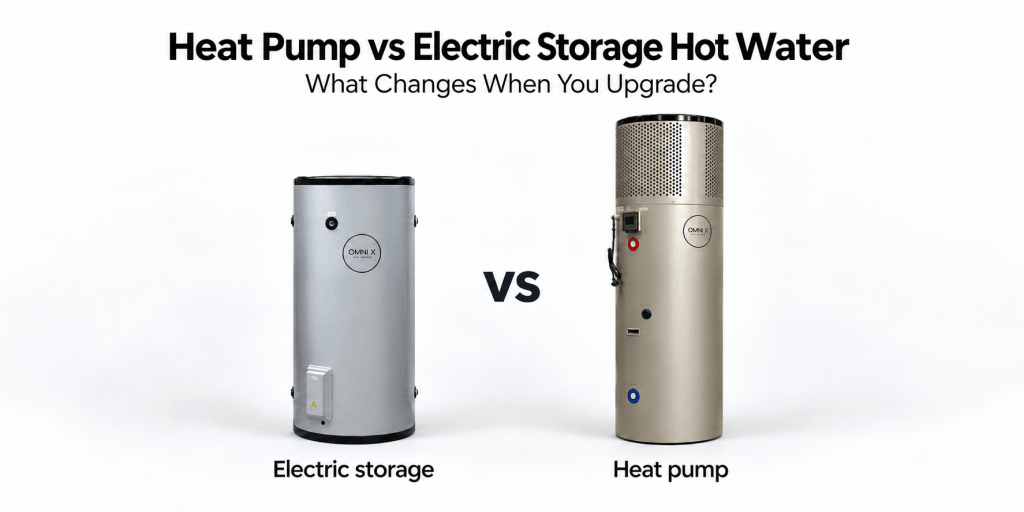
Comparing heat pump vs electric hot water is about more than the upfront price. Both can provide stored hot water, but their heating methods and installation requirements differ.
Start with your household’s needs and the existing installation. Then compare suitable models, the completed installation cost and the assumptions behind any running-cost estimate.
A conventional electric storage heater uses an electric element to heat water in its tank. A heat pump uses electricity to move heat from surrounding air into the stored water. Some models also include an electric backup element.
The Australian Government’s electrification guide explains why heat pumps can use less electricity than conventional resistance heaters. Actual results depend on the product, its operation and the household’s use.
| What to compare | Conventional electric storage | Heat pump |
|---|---|---|
| Heating method | Electric element heats the stored water | Heat is transferred from surrounding air; backup arrangements vary |
| Proposed location | Check the selected model’s placement requirements | Check airflow, clearances, drainage, sound and service access |
| Purchase decision | Compare suitable capacity and complete installation | Compare suitable capacity, recovery, controls and complete installation |
| Running-cost assessment | Use the applicable tariff and heating arrangement | Use the applicable tariff, operating mode and performance assumptions |
A supply-only price and a supply-and-install price represent different scopes. Make sure each quotation identifies the exact model and the work included.
Ask about removal of the old unit, access, any required base or relocation and plumbing or electrical changes. If a quoted discount depends on an incentive, have the eligibility and conditions confirmed for that particular purchase.
A lower initial price may be important when replacing a failed heater. For a planned upgrade, you may also have time to compare ongoing costs and different installation arrangements.
Do not assume that a heat pump will suit the old tank’s position simply because the dimensions are similar. Have the installer assess the model’s operating space and the effect of nearby walls, fences and windows.
Conventional electric models also have installation requirements, so a similar replacement should still be checked. The goal is a suitable installation with room for future servicing.
Tell the supplier when hot water demand is highest. Several morning showers, evening baths and visiting family can affect the recommendation.
Ask about recovery performance and the operating mode expected for your household. If you want scheduled heating, explain how much hot water needs to remain available outside that window.
Also mention rooftop solar and any controlled-load connection. Have the electricity arrangement assessed rather than assuming a timer or a new heater will automatically use surplus solar.
If you receive a savings estimate, ask what it assumes about electricity prices, hot water use, weather and the existing heater. Treat it as an estimate under stated conditions, rather than a guaranteed reduction in your bill.
For product options, compare heat pump hot water systems with electric hot water systems. Then contact Same Day Hot Water Service to confirm suitability, installation scope and availability for your location.
Yes. It uses electricity, but its main heating process differs from conventional resistance heating.
Compare the purchase, installation and expected running costs for your circumstances. A general efficiency statement does not establish every household’s total cost.
Have capacity and recovery assessed for the selected model and your pattern of use. Matching the old capacity is not a complete sizing assessment.
Please contact our sales team to place your order.
call 1300 721 996
Please note: an additional $185 charge will apply if a tempering valve is required.